01
Find the question worth pursuing.
Explore candidate ideas and their precedents. Clarify the scientific gap and why closing it matters.
A RESEARCH PROTOTYPE
Develop your next R01 from a question worth pursuing to a proposal grounded in evidence.
GrantTune brings literature, research ideas, model comparisons, and expert feedback together—helping you sharpen what matters, challenge assumptions, and shape a research plan you can stand behind.
Start shaping your proposalEarly research workspace · By private invitation only
FROM QUESTION TO PROPOSAL
Clarify why the question matters, what the evidence supports, and how your research could move the field forward.
Explore candidate ideas and their precedents. Clarify the scientific gap and why closing it matters.
Connect claims to sources in a shared library. Identify what is established, what remains uncertain, and what evidence you still need.
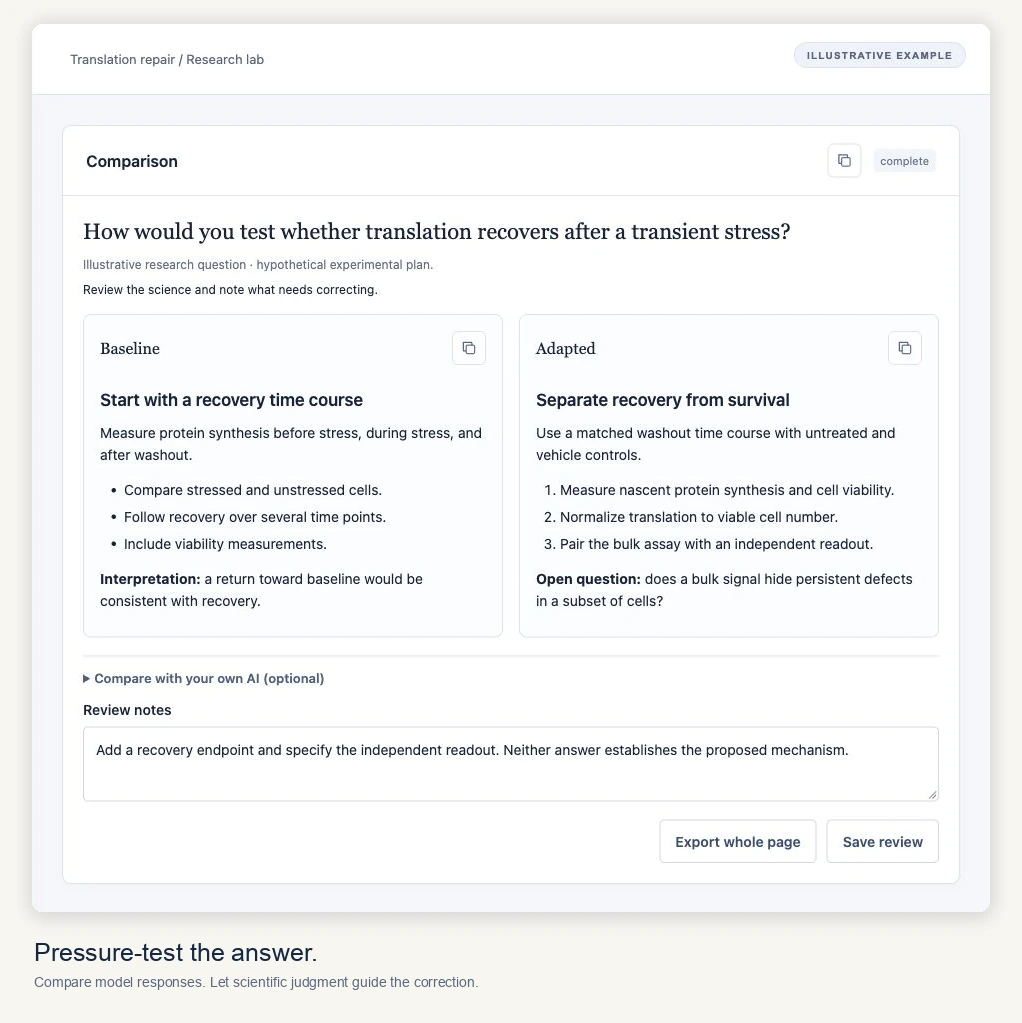
Use model comparisons and expert review to challenge assumptions, interpretations, and proposed experiments. Record corrections that strengthen the science.
Develop aims that connect the problem, hypothesis, approach, and expected contribution. Refine the draft with your collaborators.
INSIDE THE WORKSPACE
FOLLOW THE EVIDENCE
Bring the source passage and your scientific judgment together. Question the interpretation, record the uncertainty, and refine what the evidence supports.
Explore your workspace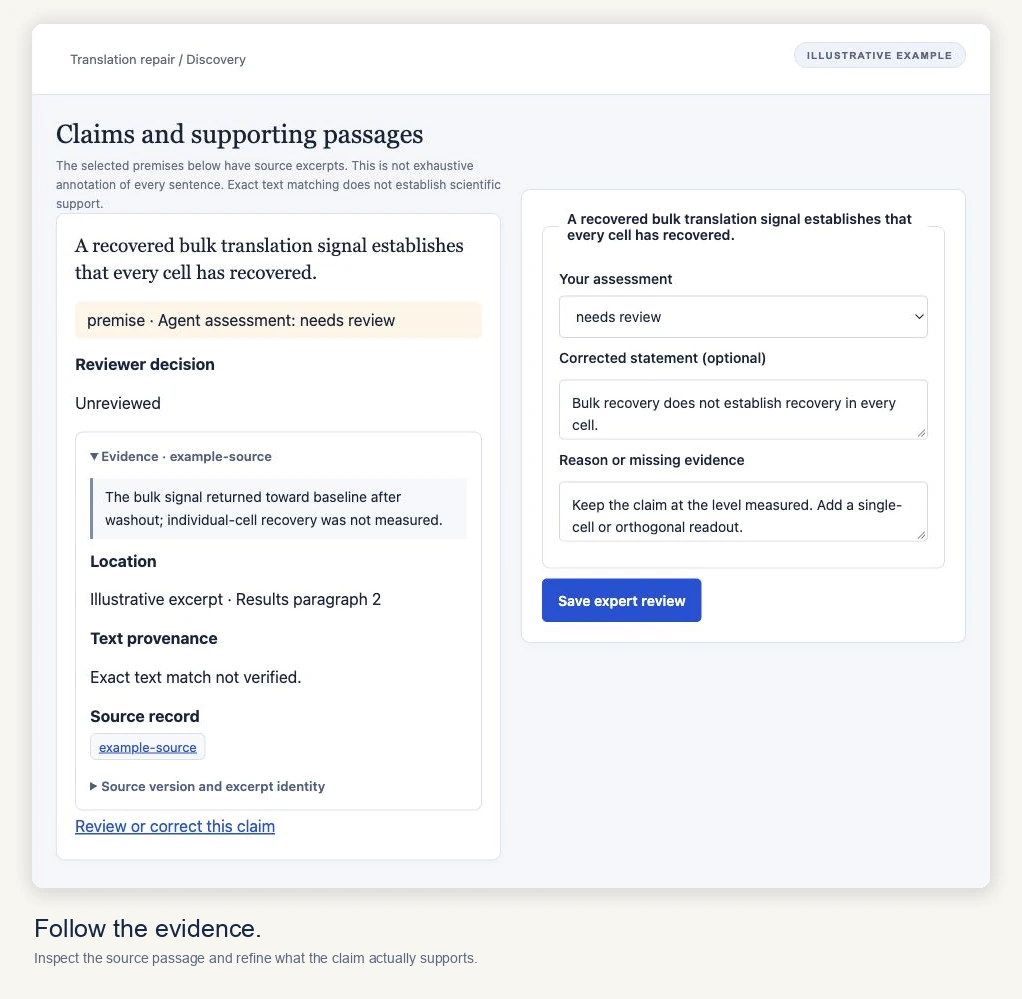
MAKE THE CASE CLEARLY
Start with a scientific brief or an existing draft. Develop a Specific Aim, then refine the reasoning and language. Bring your collaborators into a shared space for evidence, ideas, and expert review.
Read the getting-started guide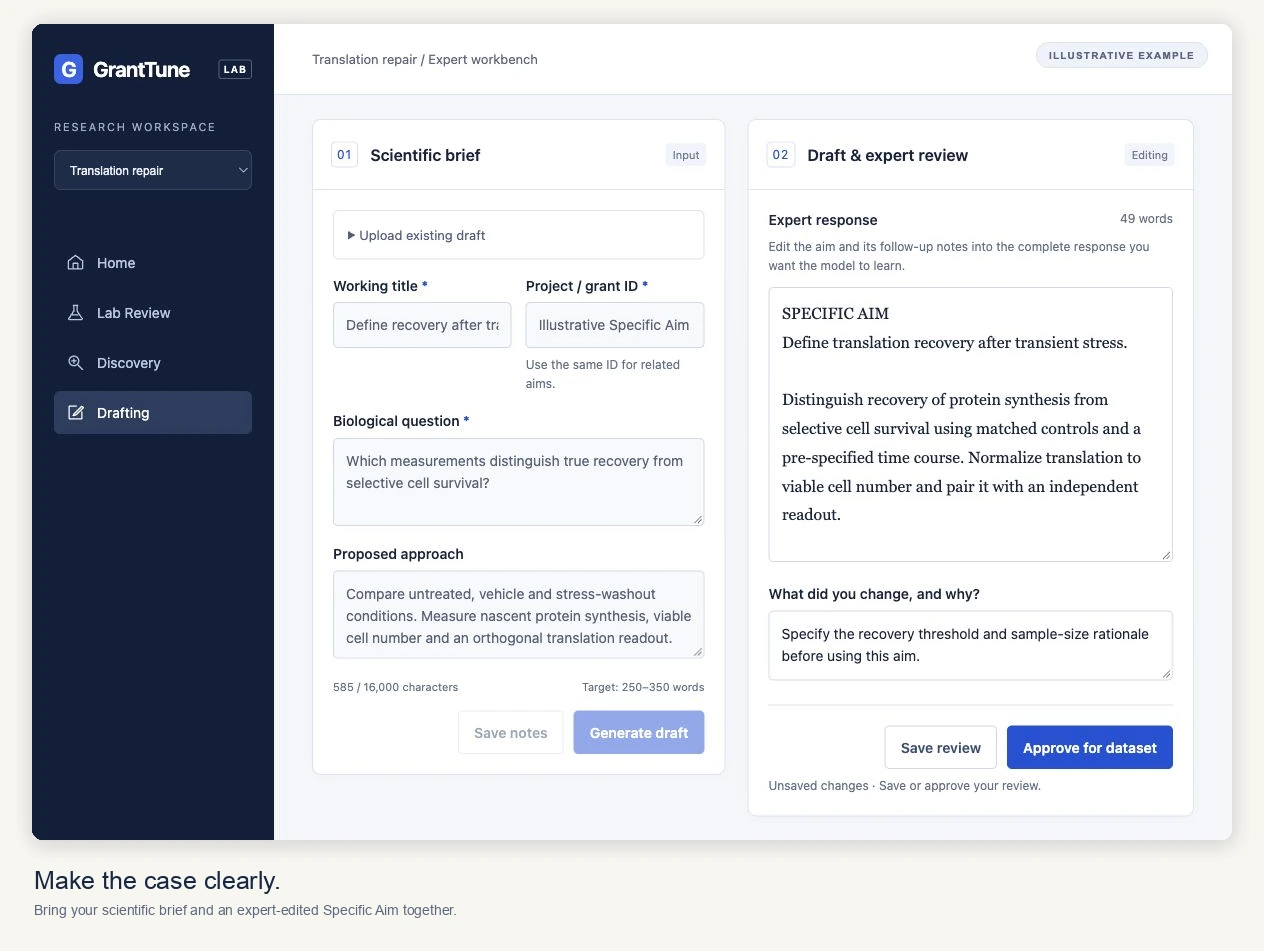
Illustrative examples of the review process.
“Frontier models can be impressive at complex reasoning. But scientific writing demands more: a rigorous chain of evidence, careful distinctions between what is known and what is inferred, and prose that reflects how scientists build an argument. That’s the gap we’re working to close.”
OUR RESEARCH APPROACH
We’re exploring how domain-adapted models and expert feedback can help scientists develop more compelling research proposals. Your judgment guides the process: which questions matter, what the evidence supports, and what needs another experiment.
SCIENTIFIC LITERATURE
We’re starting with translation, tRNAs, and proteostasis while we pressure-test the approach. Literature adaptation and expert review help us study where models are useful.
GRANT WRITING
A separate, planned training stage will use approved grant examples and corrected aims. Over time, we aim to support new research workspaces and larger models for post-training.
Expert review of scientific claims, citations, and complete answers helps us assess progress.
EXPERT GUIDED. EVIDENCE FIRST.
Build the evidence, challenge the plan, and make a stronger case for support—with your scientific judgment at the center.